When Bloating Becomes a Daily Battle: How a 52-Year-Old Reconsidered Her Approach to Gut Health
For many people, bloating is something they experience occasionally after a heavy meal. But when the sensation becomes frequent, uncomfortable and persistent, it can begin to affect much more than digestion. Sleep, appetite, confidence, mobility and even the willingness to attend social gatherings can gradually change.
For Monika Arora, 52, severe bloating had become part of everyday life. For nearly four years, she had been struggling with persistent digestive discomfort and what she described as a significant deterioration in her gut health. What initially appeared to be a digestive problem had slowly become a lifestyle concern.
“I had started accepting bloating as something I simply had to live with,” Monika recalls. “There were days when I felt uncomfortable even after eating a normal meal. I knew something in my routine and digestion needed attention.”
Her experience reflects a broader conversation taking place around gut health, digestive wellness and preventive healthcare. Increasingly, people are looking beyond quick solutions and asking a different question: What lifestyle factors may be contributing to recurring digestive discomfort?
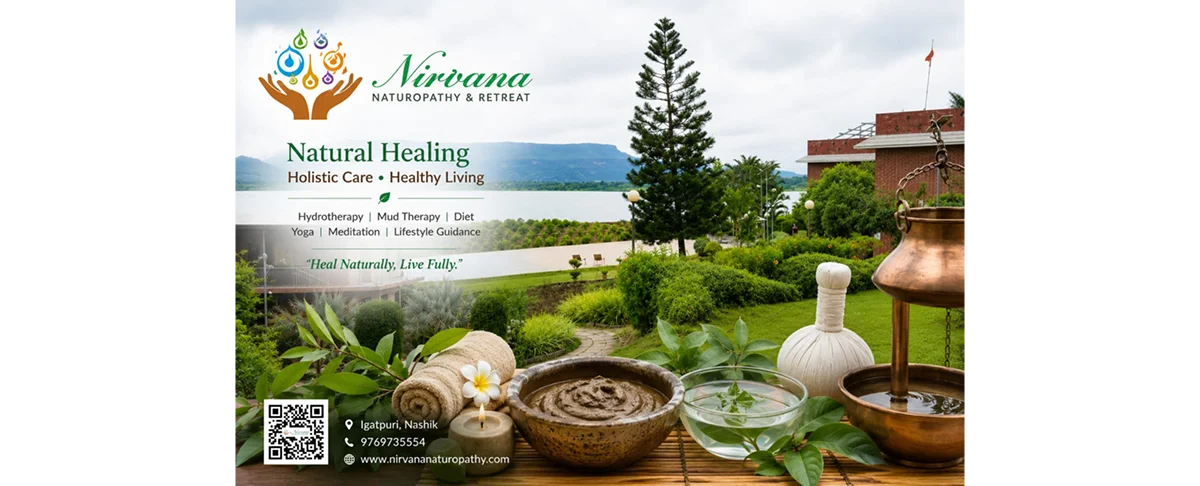
It was with this perspective that Monika sought naturopathy-based wellness care at Nirvana Naturopathy and Retreat, Igatpuri, Nashik, associated with Gurumaa Yogita Khatri.
Nestled in the natural surroundings of Igatpuri, the centre follows a lifestyle-oriented approach that combines naturopathy therapies, dietary guidance, yoga, relaxation and other natural wellness practices. In Monika’s case, the programme included natural hydrotherapy, personalised diet management and mud therapy, under the supervision of Dr. Roshni Bala, BNYS, at Nirvana Naturopathy and Retreat.
The objective was not simply to focus on bloating as an isolated symptom, but to look at the larger picture of her lifestyle and digestive wellness.
This distinction is important.
Modern lifestyles can involve irregular eating schedules, highly processed foods, inadequate physical activity, prolonged sitting, stress and disrupted sleep. While these factors do not explain every case of bloating, they can influence overall digestive comfort and general wellbeing. Persistent or severe bloating, however, can also have underlying medical causes and should not automatically be attributed to lifestyle alone.
At Nirvana, Monika’s wellness programme incorporated hydrotherapy, a traditional naturopathic practice that uses water in different therapeutic applications. The programme also included mud therapy, another traditional naturopathy modality, along with dietary changes designed around her individual requirements.
For Monika, the dietary component became particularly significant.
Rather than viewing food simply in terms of calories, the programme encouraged her to become more conscious of meal timing, food choices, portion sizes and her body’s response to different foods. This shift towards mindful eating became one of the practical lessons she carried beyond the retreat.
“Earlier, I was mainly looking for something that would give me immediate relief,” she says. “At Nirvana, I began looking at my daily habits differently. I understood that gut health is connected with the way we live every day.”
Dr. Roshni Bala’s role was to provide professional supervision during the naturopathy programme and to ensure that the therapies and dietary recommendations were approached systematically rather than randomly.
That supervision is particularly relevant when people explore natural therapies. “Natural” does not automatically mean that a therapy is appropriate for everyone. Individual health history, existing medical conditions, medications and the cause of symptoms need to be considered before undertaking any wellness programme.
Monika says that the combination of a structured routine, dietary discipline and naturopathy therapies helped her feel a noticeable difference in her overall digestive comfort during her stay.
Her experience also highlights a larger shift in healthcare thinking: prevention and lifestyle management are becoming increasingly important conversations alongside conventional medical care.
Gut health has emerged as one of the most discussed areas of wellness in recent years. From digestive comfort and dietary habits to sleep, stress management and physical activity, people are becoming more aware that everyday behaviour can influence how they feel.
Yet there is an important message for anyone experiencing persistent bloating: symptoms should not simply be ignored. Recurrent or severe bloating can sometimes be associated with conditions requiring medical evaluation. A qualified healthcare professional should assess persistent symptoms, particularly when they are accompanied by unexplained weight loss, vomiting, bleeding, fever, severe pain or significant changes in bowel habits.
Monika’s story, therefore, is less about a “miracle cure” and more about a change in perspective.
After four years of living with severe bloating, she decided to stop treating the discomfort as an unavoidable part of growing older and instead explore a more structured approach to lifestyle and digestive wellness.
Her experience at Nirvana Naturopathy and Retreat, Igatpuri, Nashik, under the guidance of Gurumaa Yogita Khatri and with naturopathy care supervised by Dr. Roshni Bala, BNYS, became an opportunity to reassess her relationship with food, routine and wellbeing.
For someone who has spent years searching for answers, sometimes the most meaningful change begins with a simple question:
What can I change in the way I live every day?
That question is increasingly at the heart of the modern conversation around gut health, naturopathy, natural wellness, preventive healthcare and lifestyle medicine.
For wellness enquiries: Nirvana Naturopathy and Retreat, Igatpuri, Nashik | 9769735554
About the Author